For two years, I worked on Ohm as a founding partner, helping bring a new health and wellness product from early concept into a fully realized brand and digital ecosystem.
My role covered a lot of ground: product design input, brand development, marketing strategy, visual direction, app design, content, social, video, web, and launch materials. Like most early-stage startups, the work required wearing a lot of hats and making each piece connect back to the same idea.
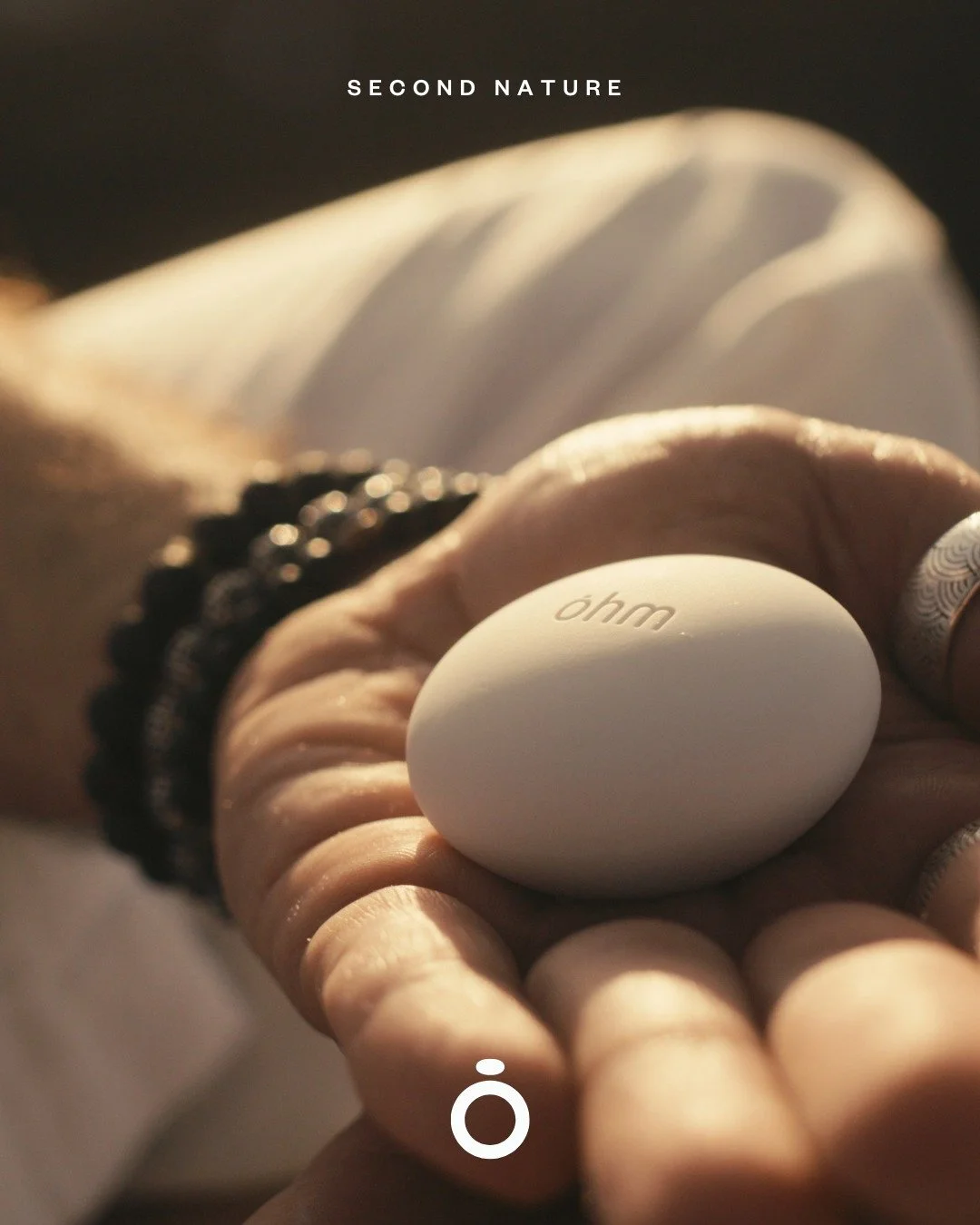
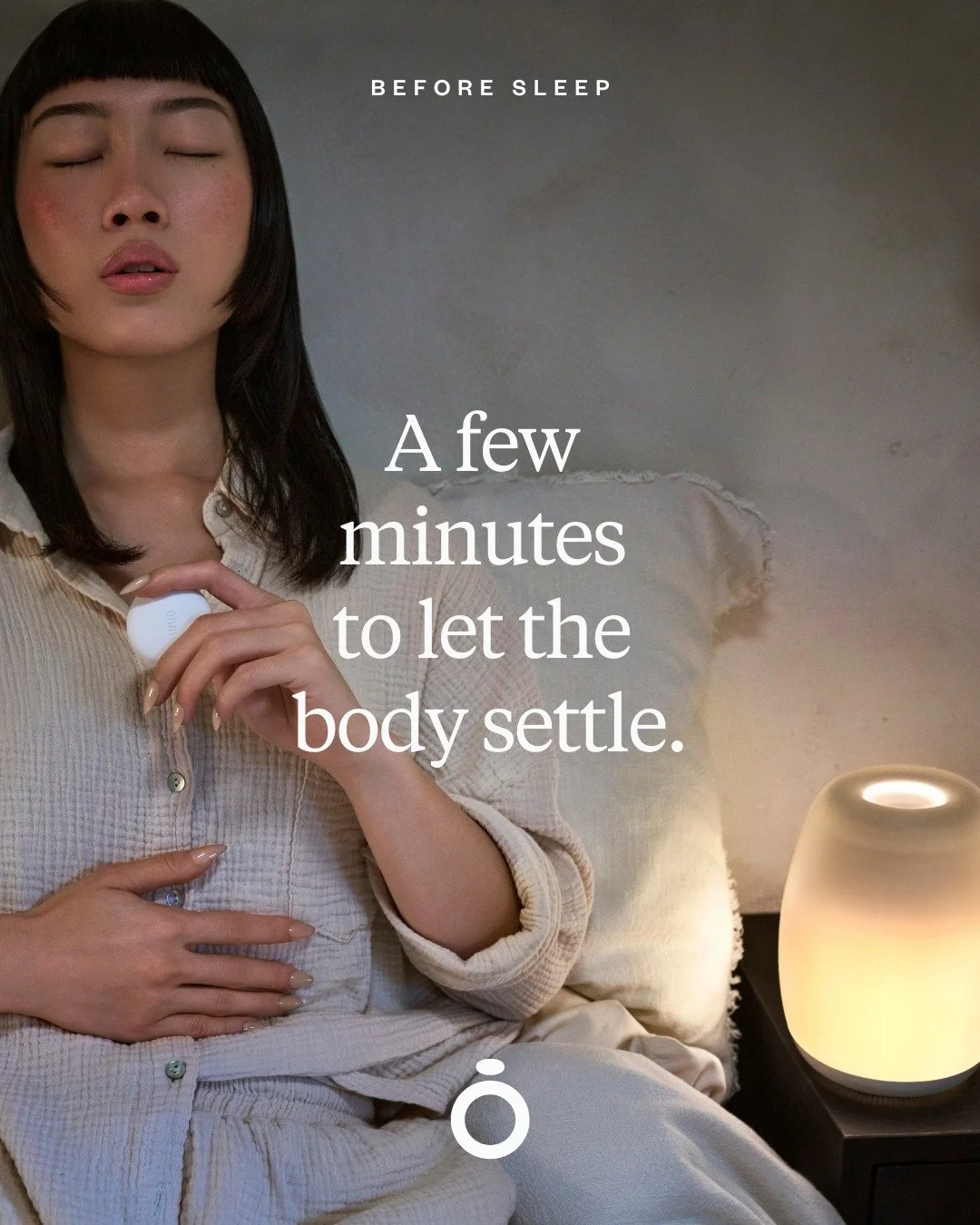
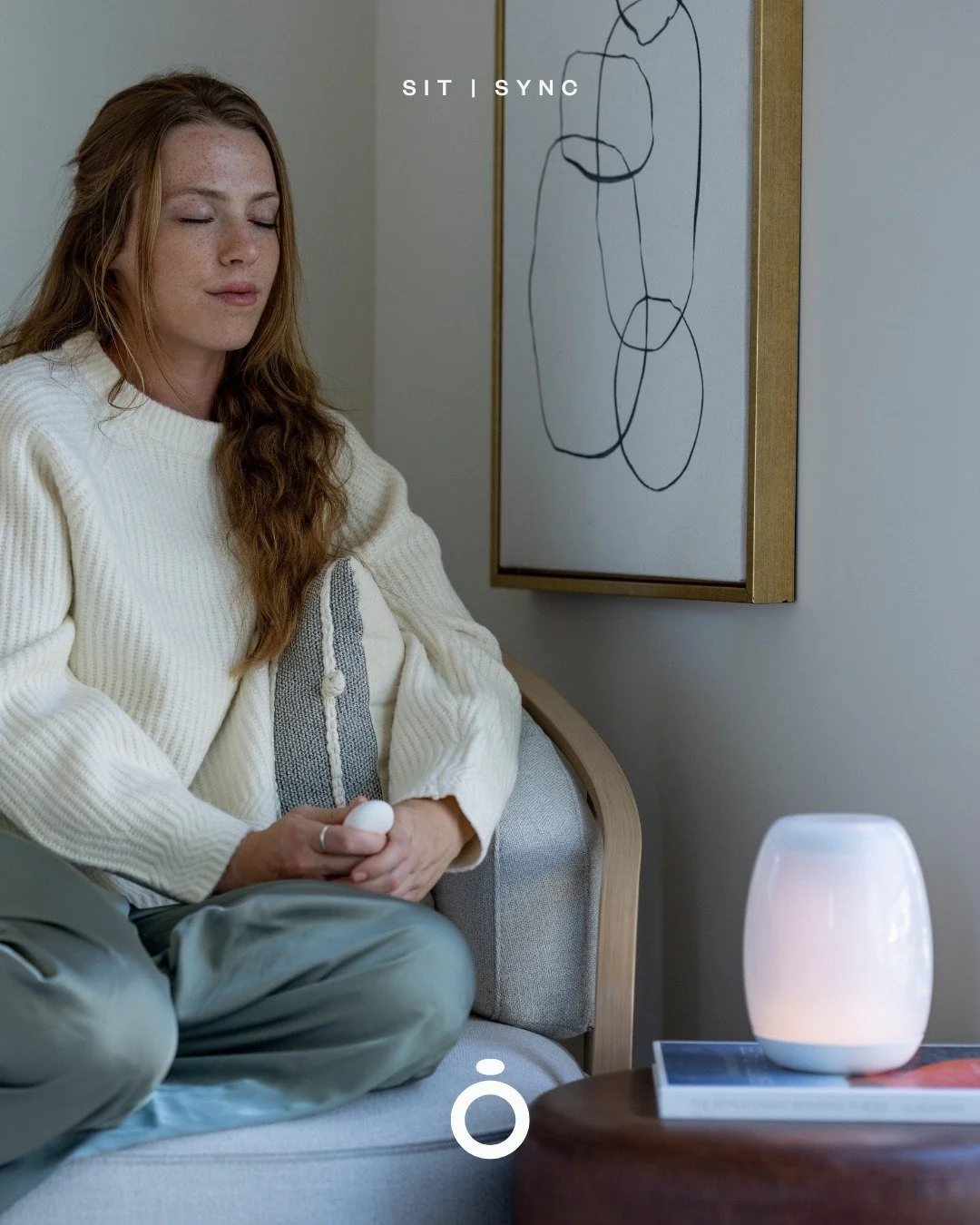
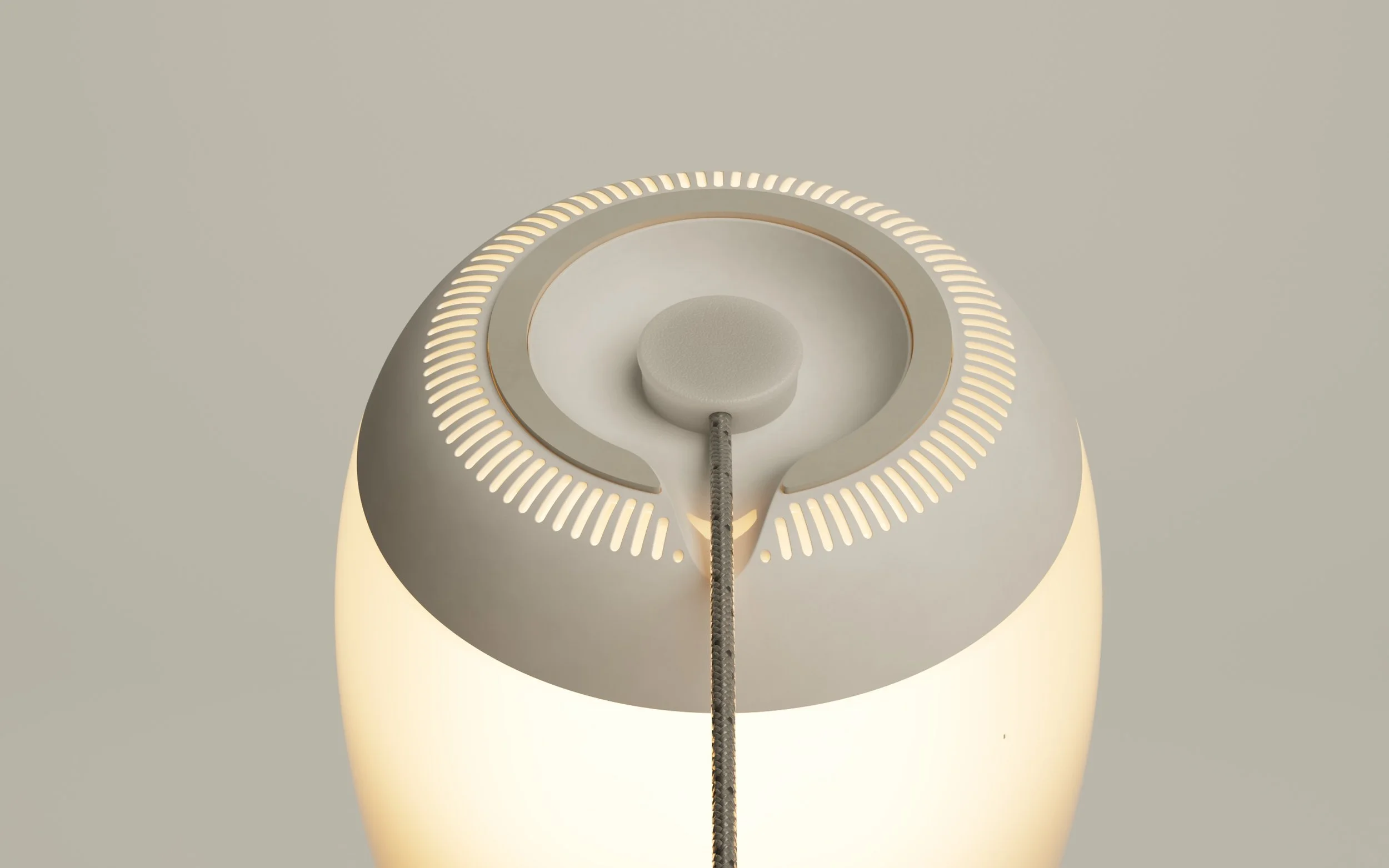
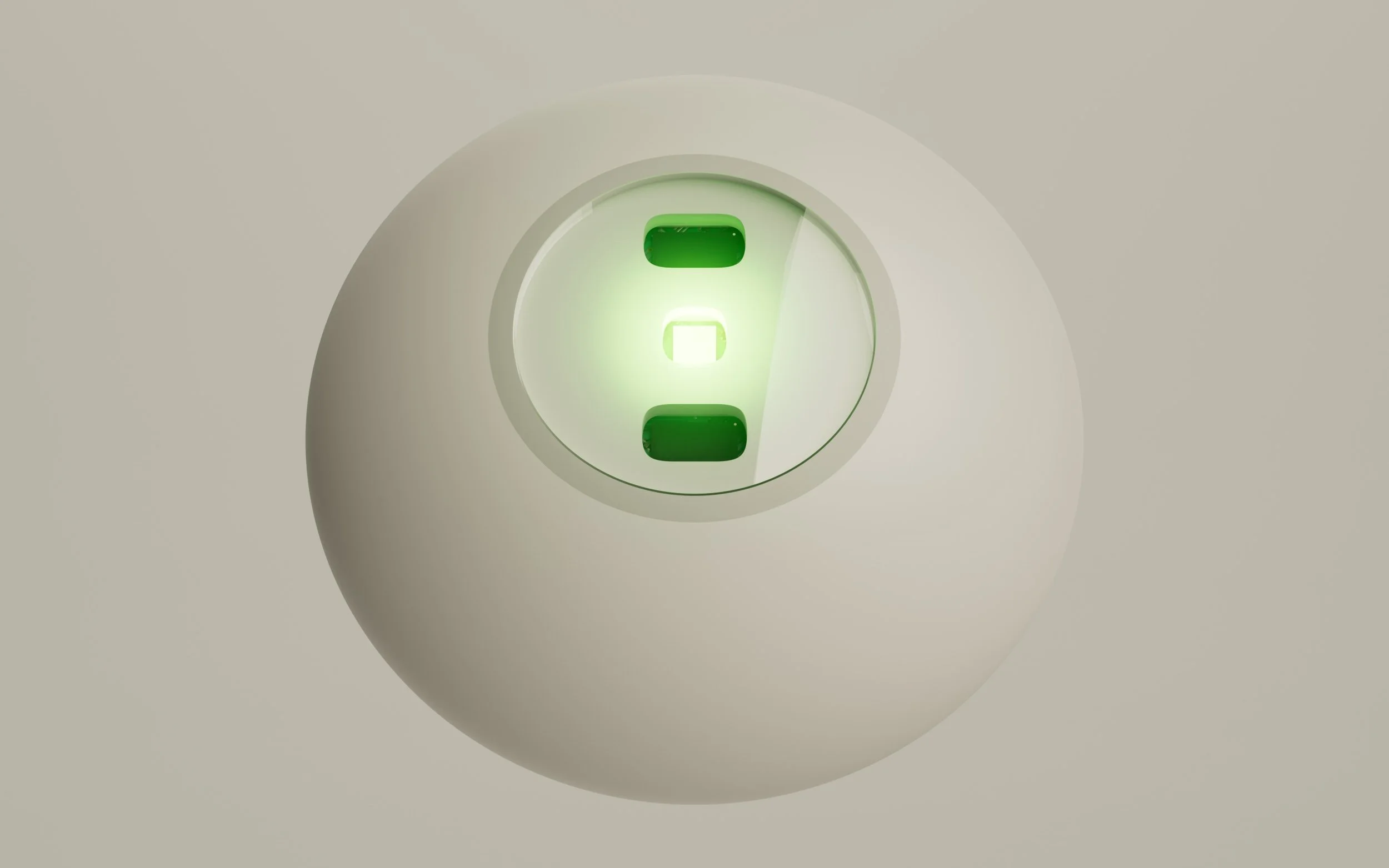
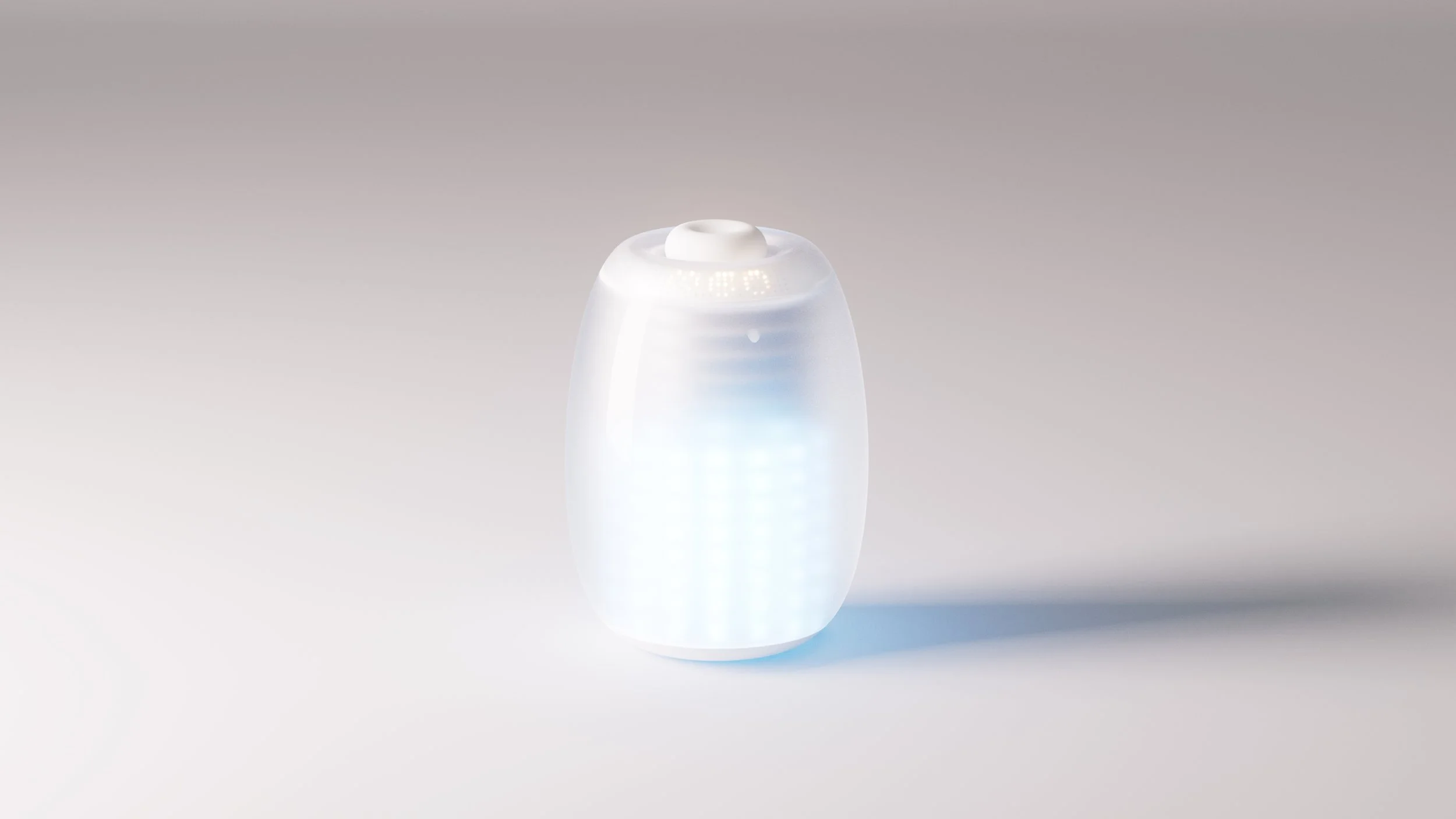
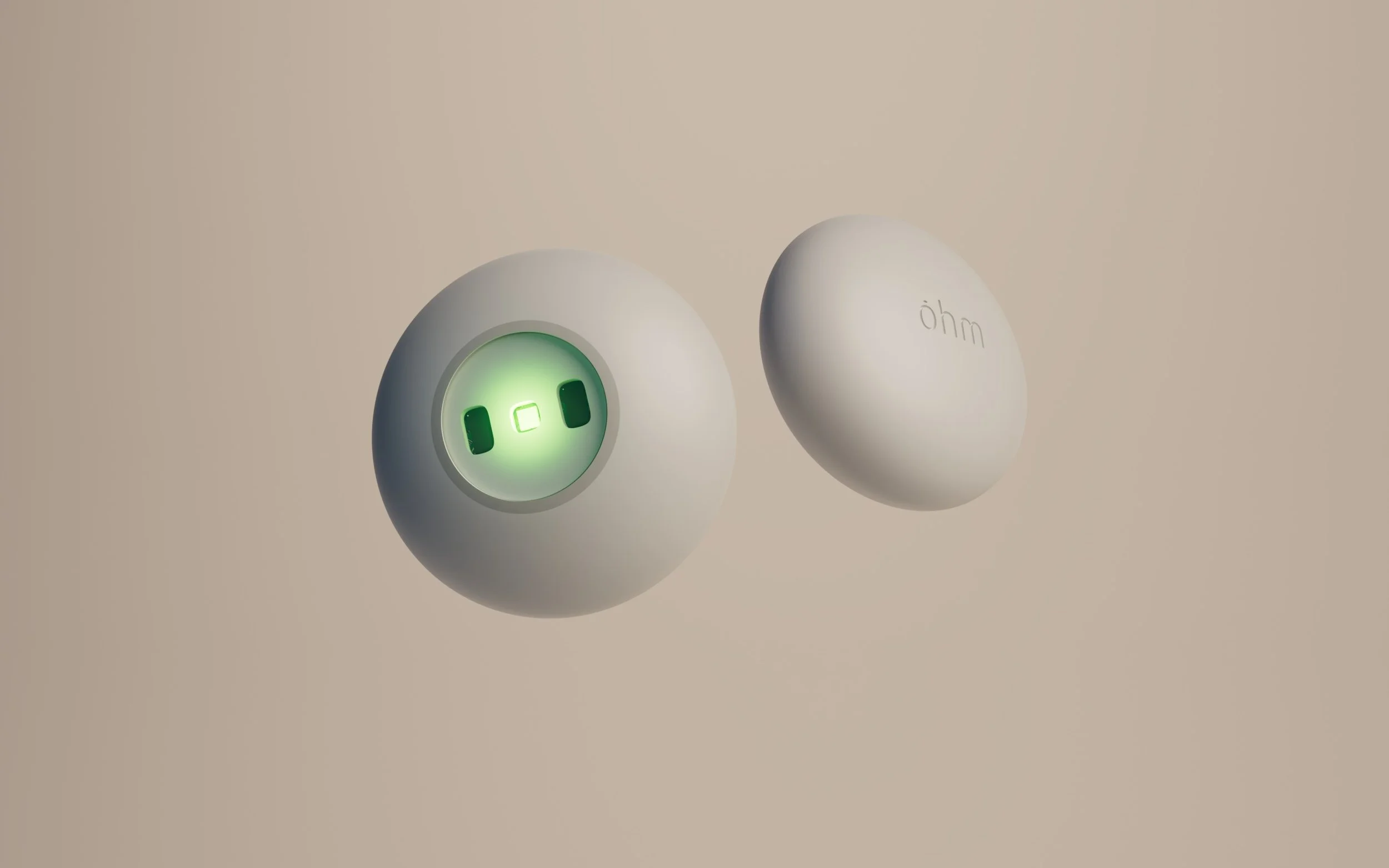
Ohm is a screen-free breathing lamp designed to help people build a daily practice around calm. The product pairs light, sound, touch, and biometric feedback to guide users through resonance breathing and give them a visible signal when their body shifts toward a calmer state.
The challenge was to make the science feel understandable, the product feel desirable, and the brand feel more like a beautiful ritual than another wellness gadget.
Brand Videos
Video became one of the most important ways to explain Ohm.
The product is simple once you see it, but harder to describe in a sentence. The videos helped show the interaction between the lamp, the sensing stone, the breath, and the body, turning an abstract idea into something people could immediately understand.
They also gave the brand a more human center: calm as something you can practice, see, and feel.
Product Renderings
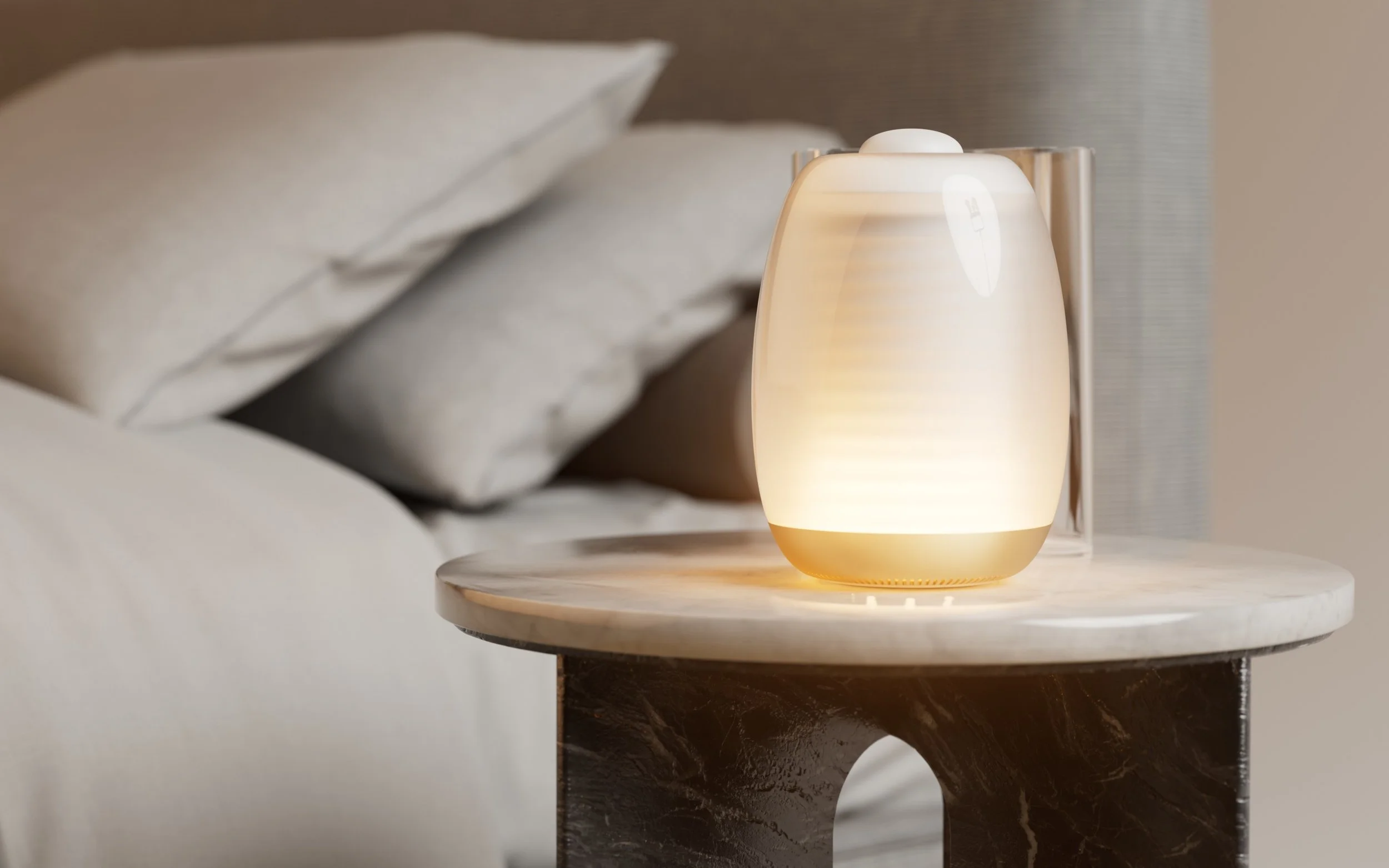
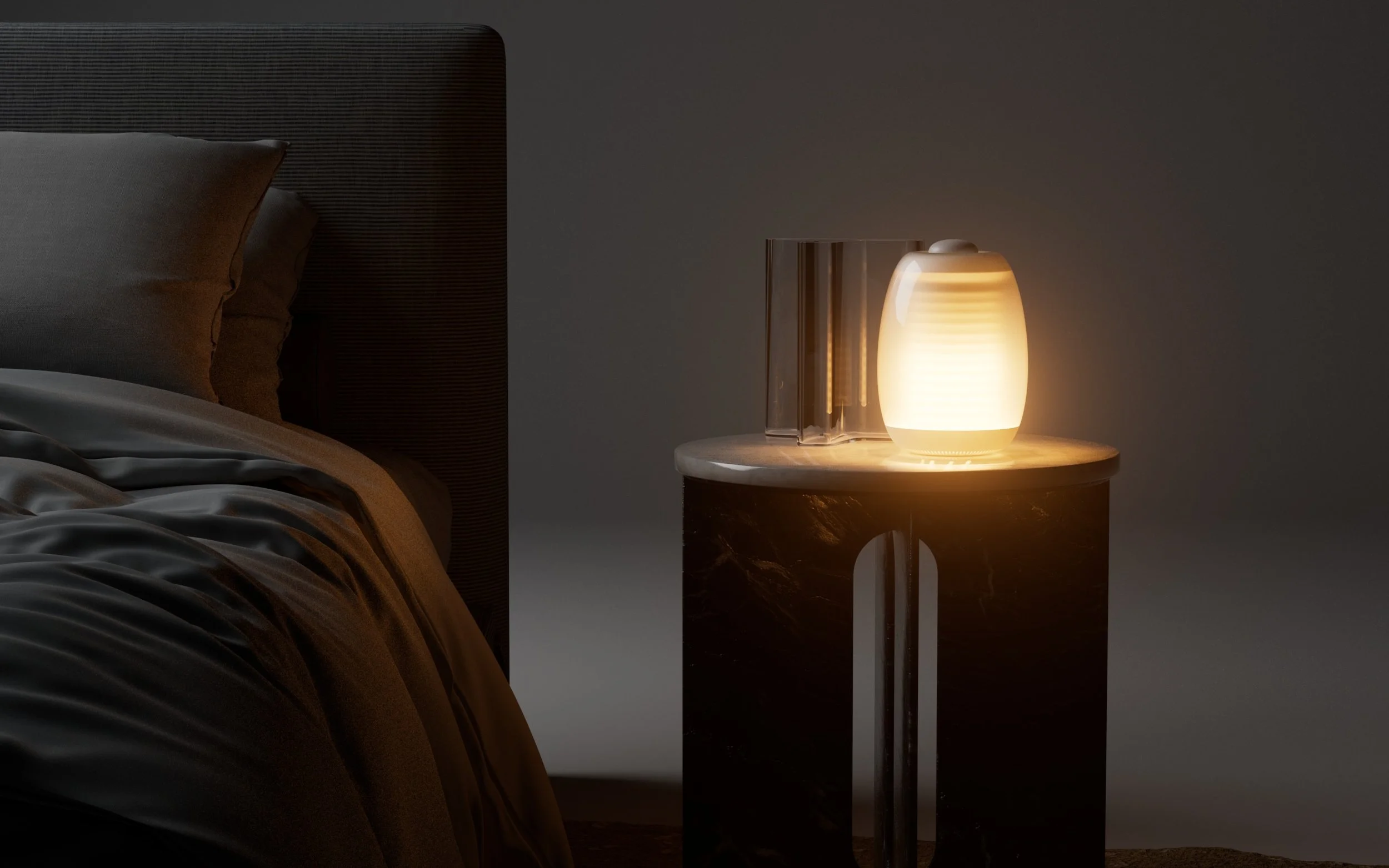
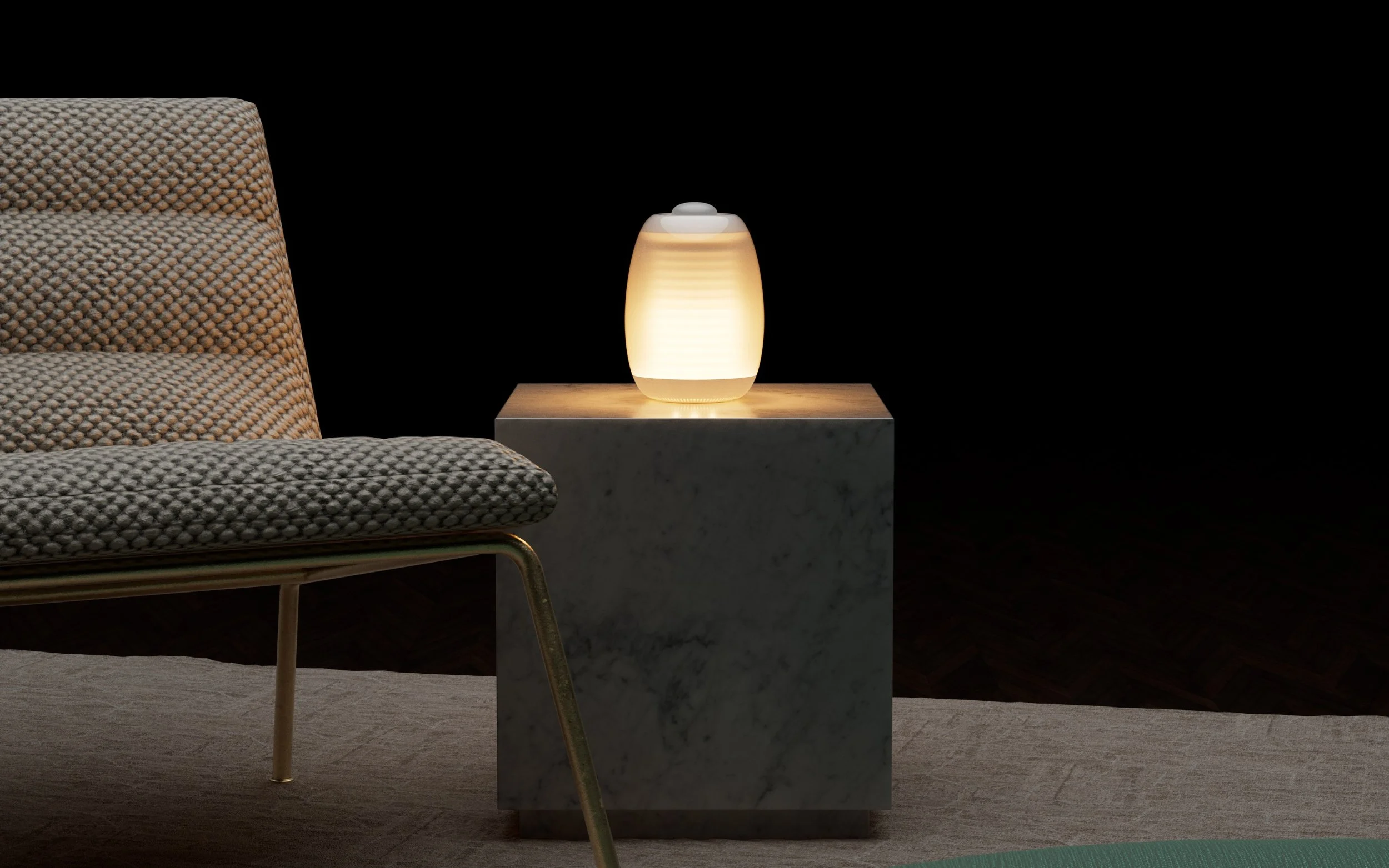
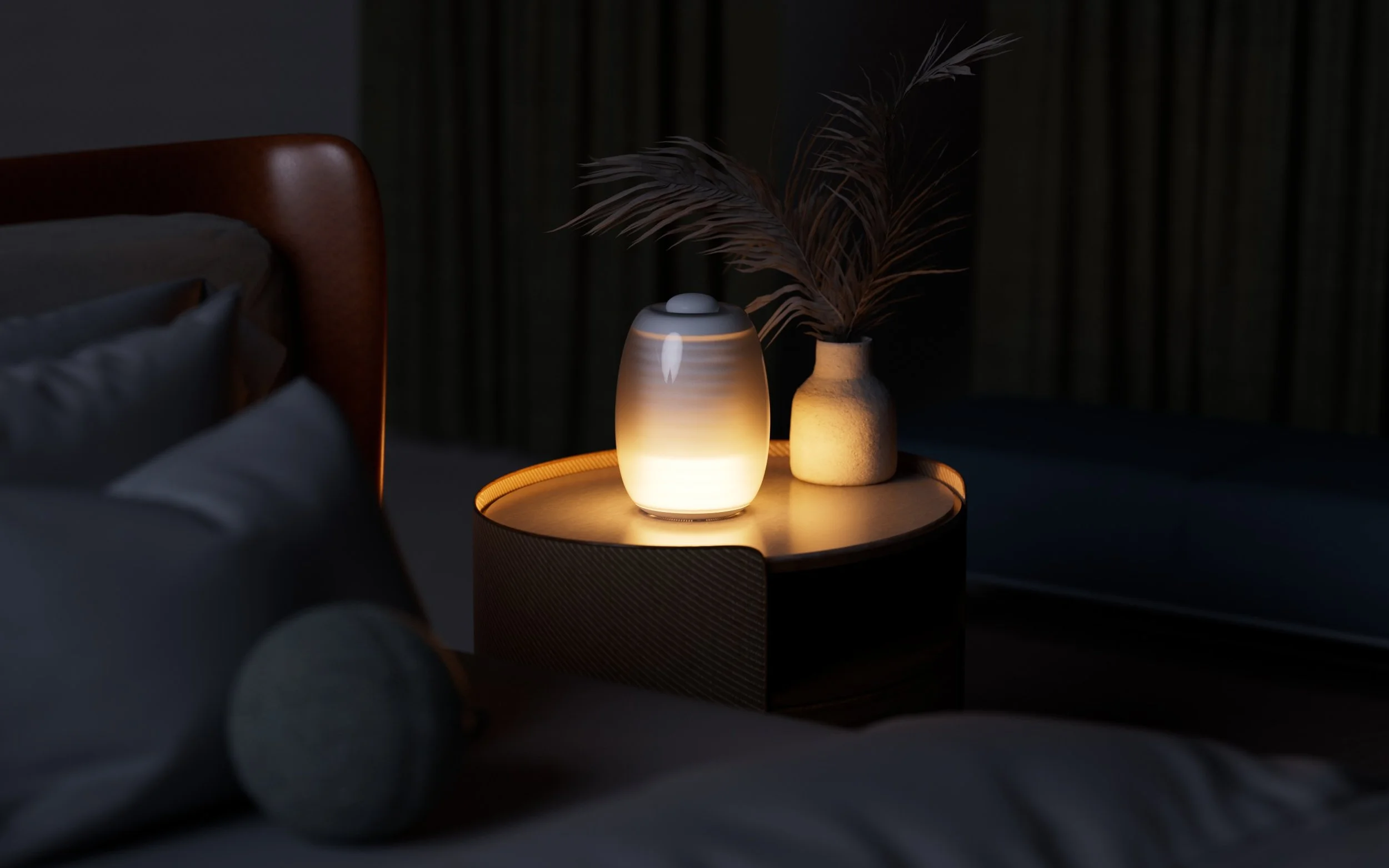
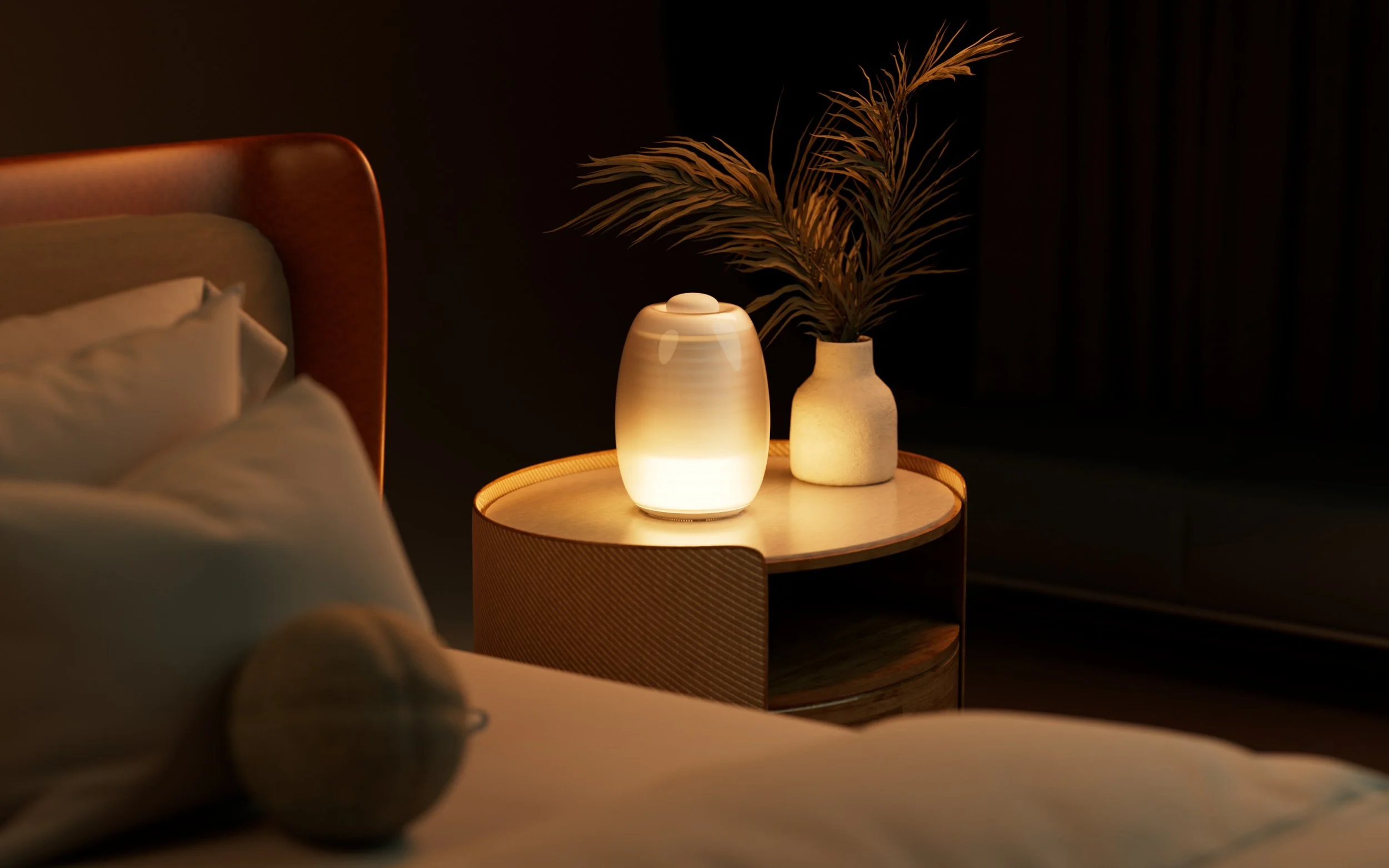
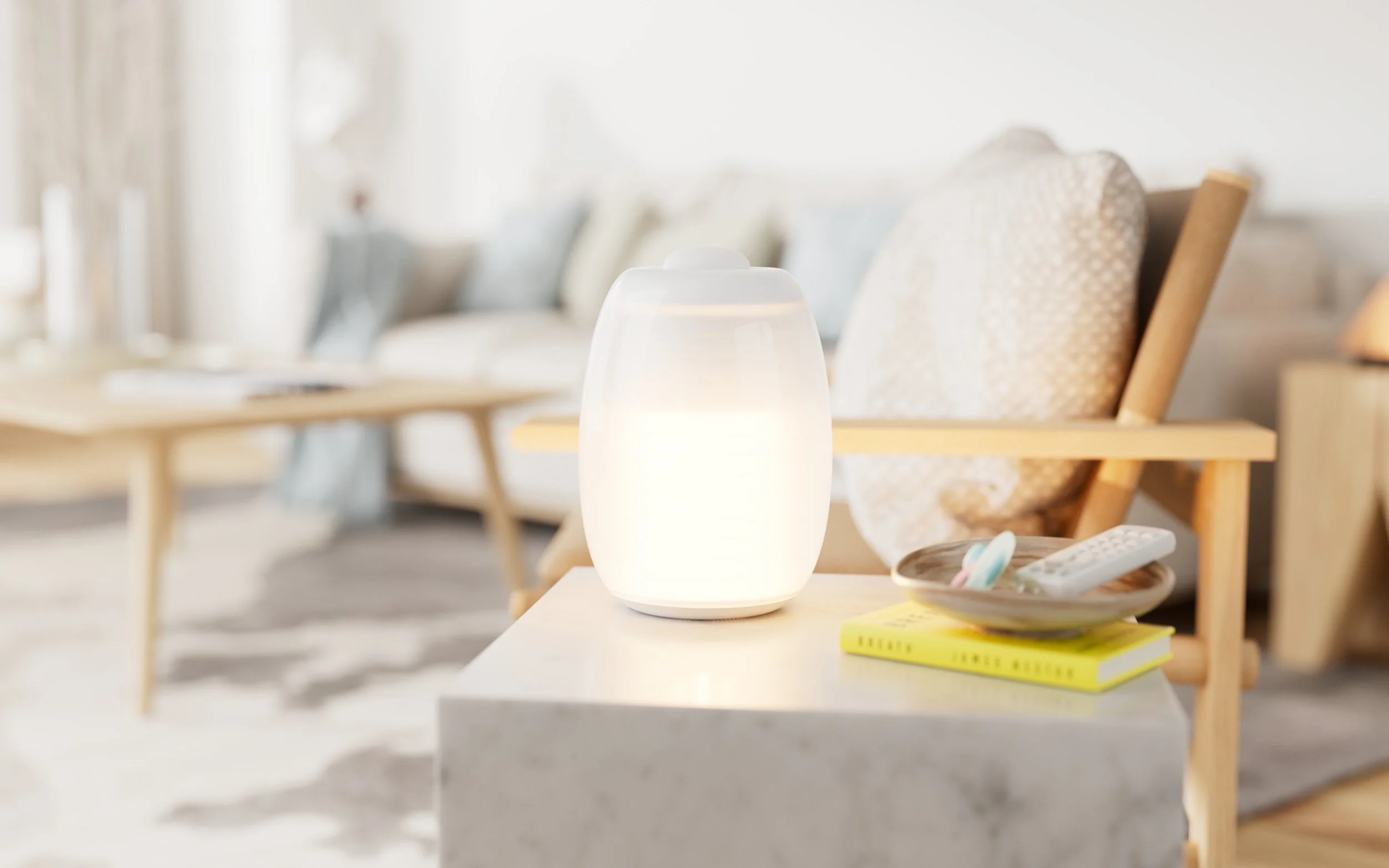
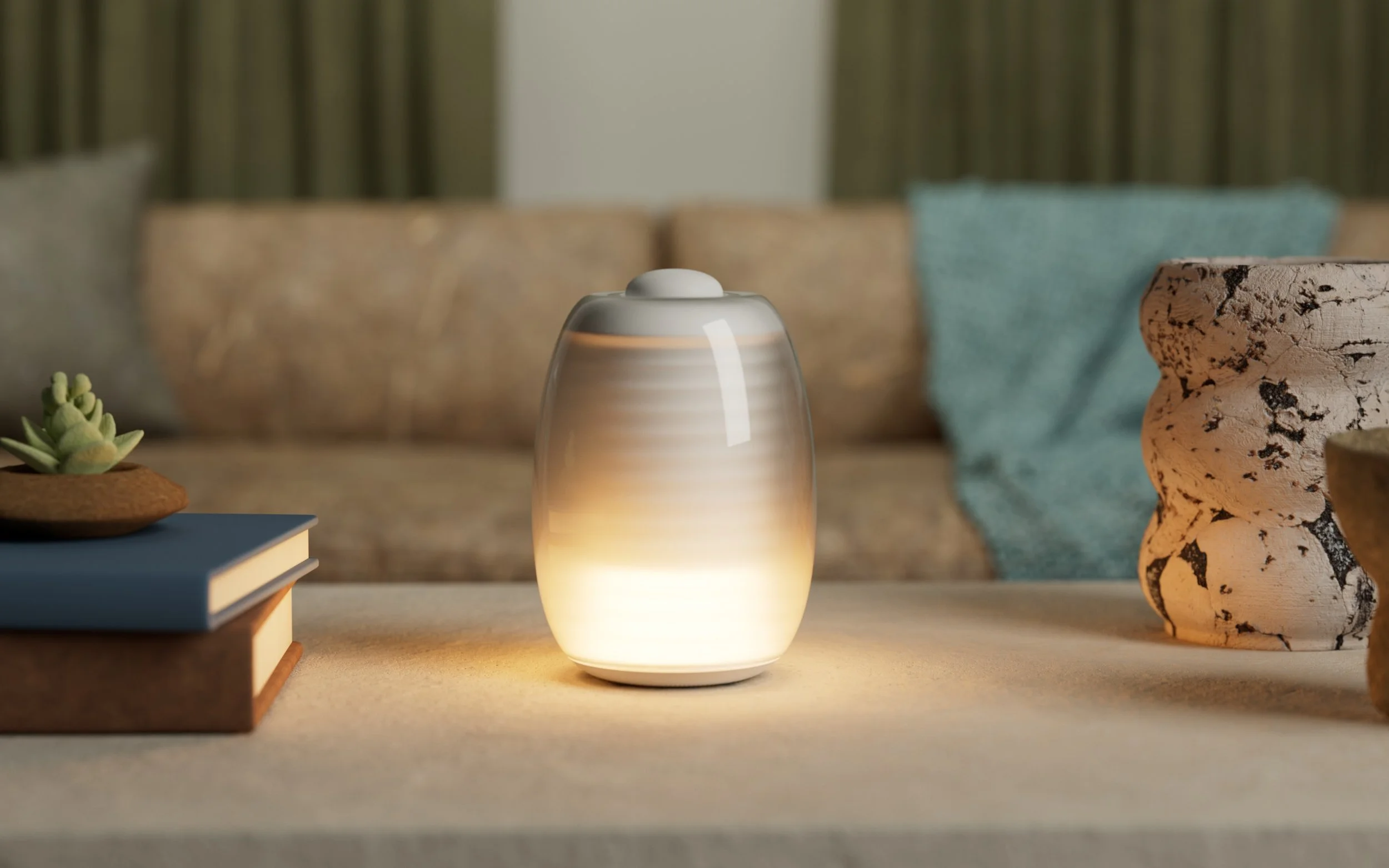
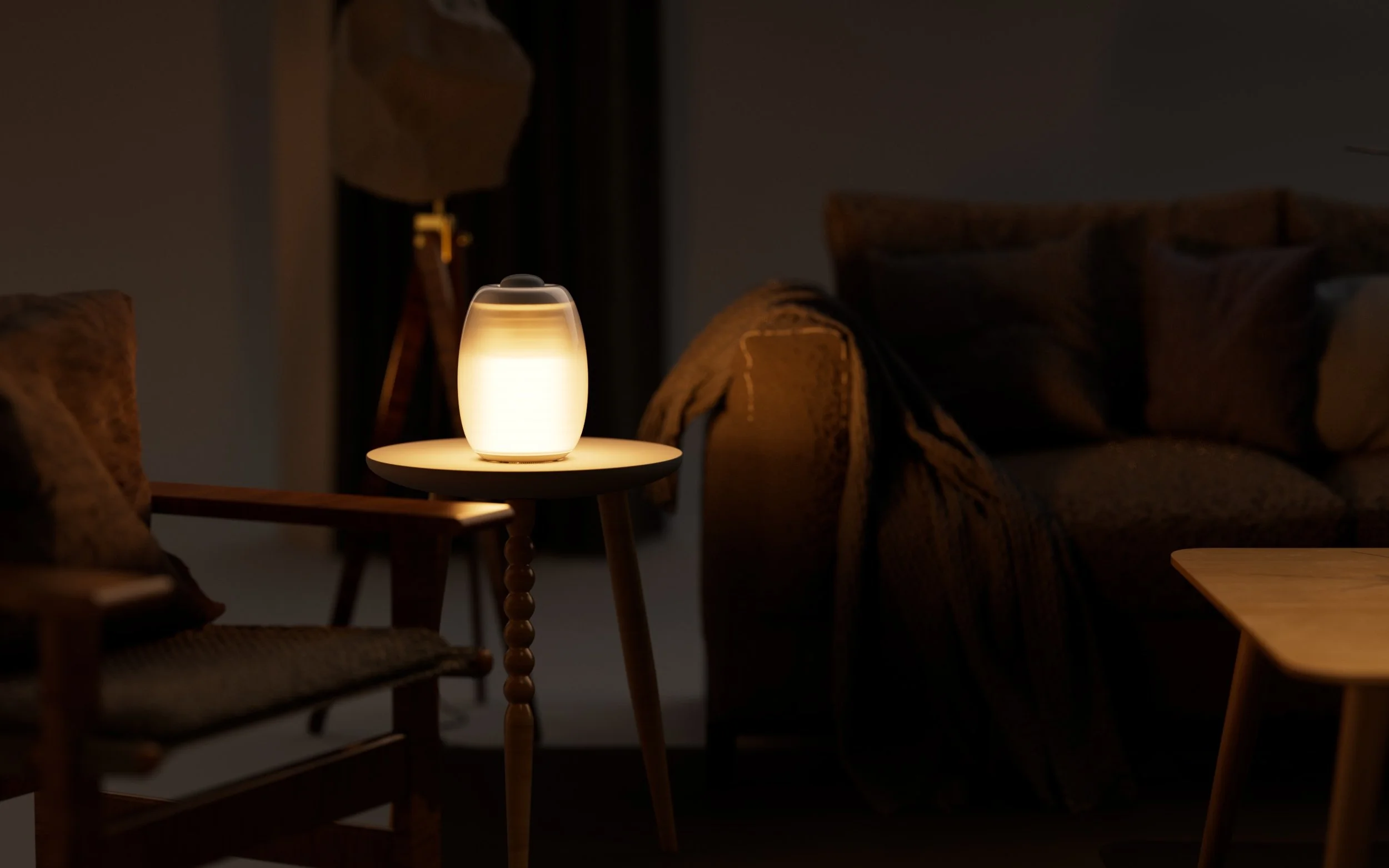
Because the product was still evolving, rendering became a major part of the visual system.
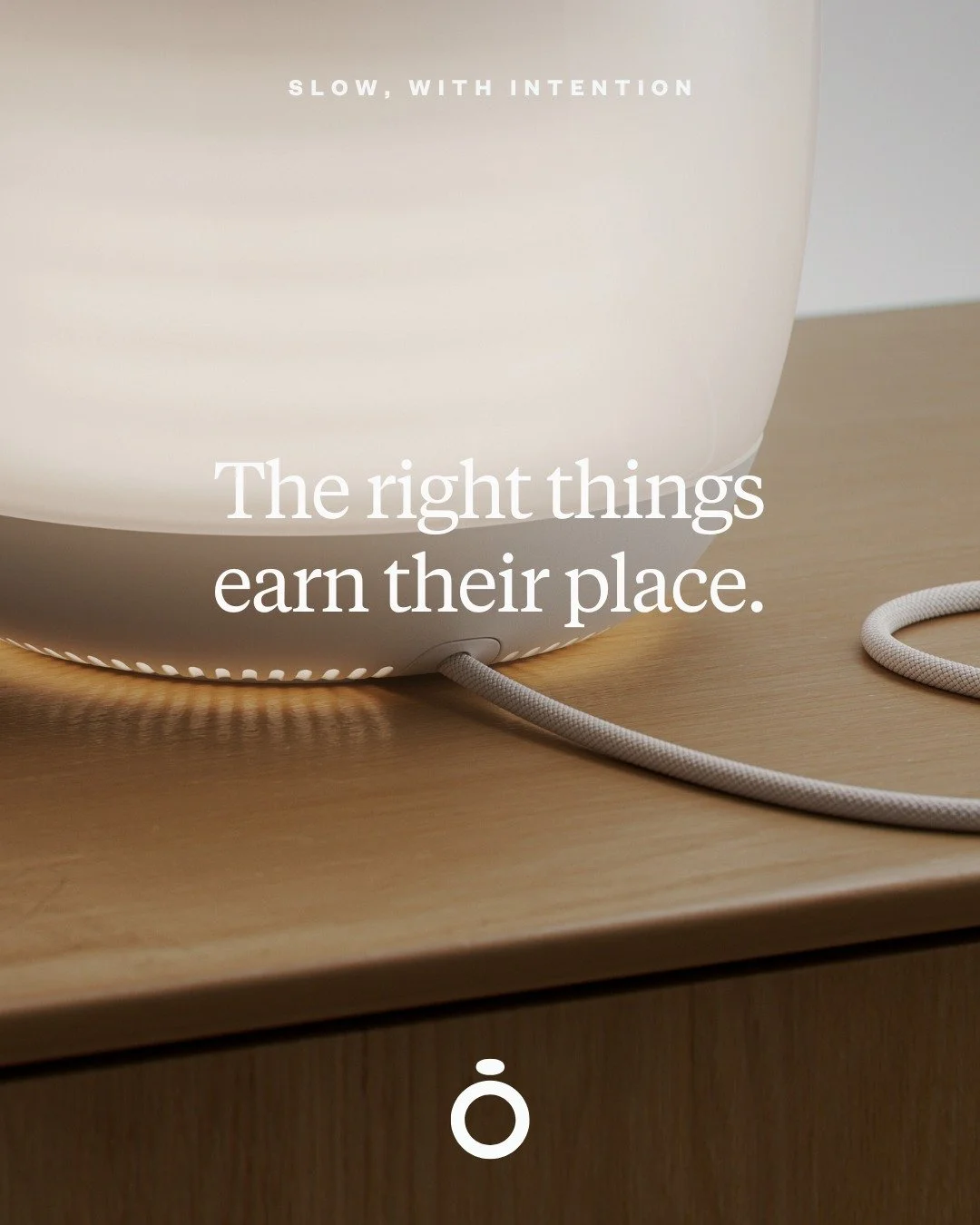
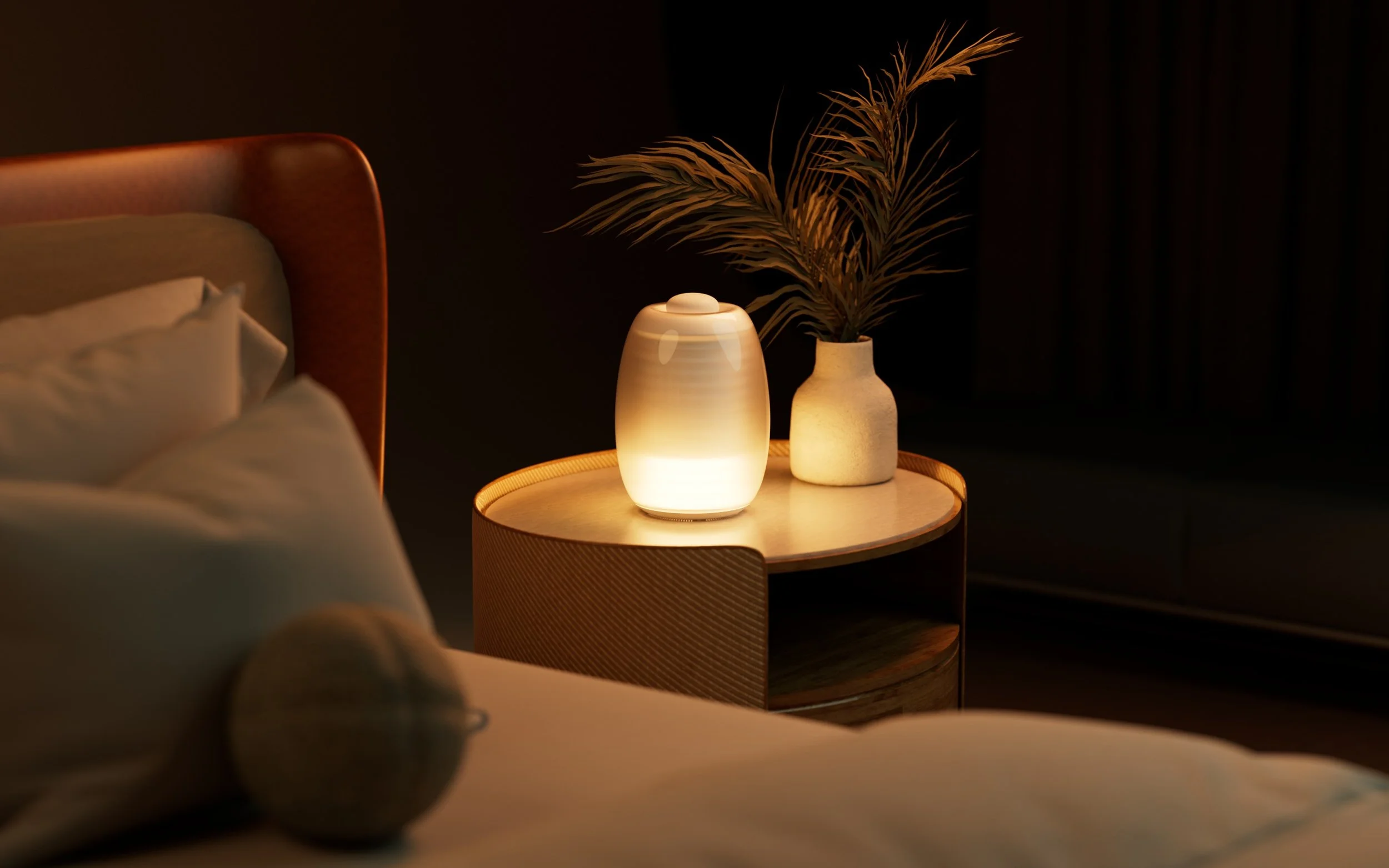
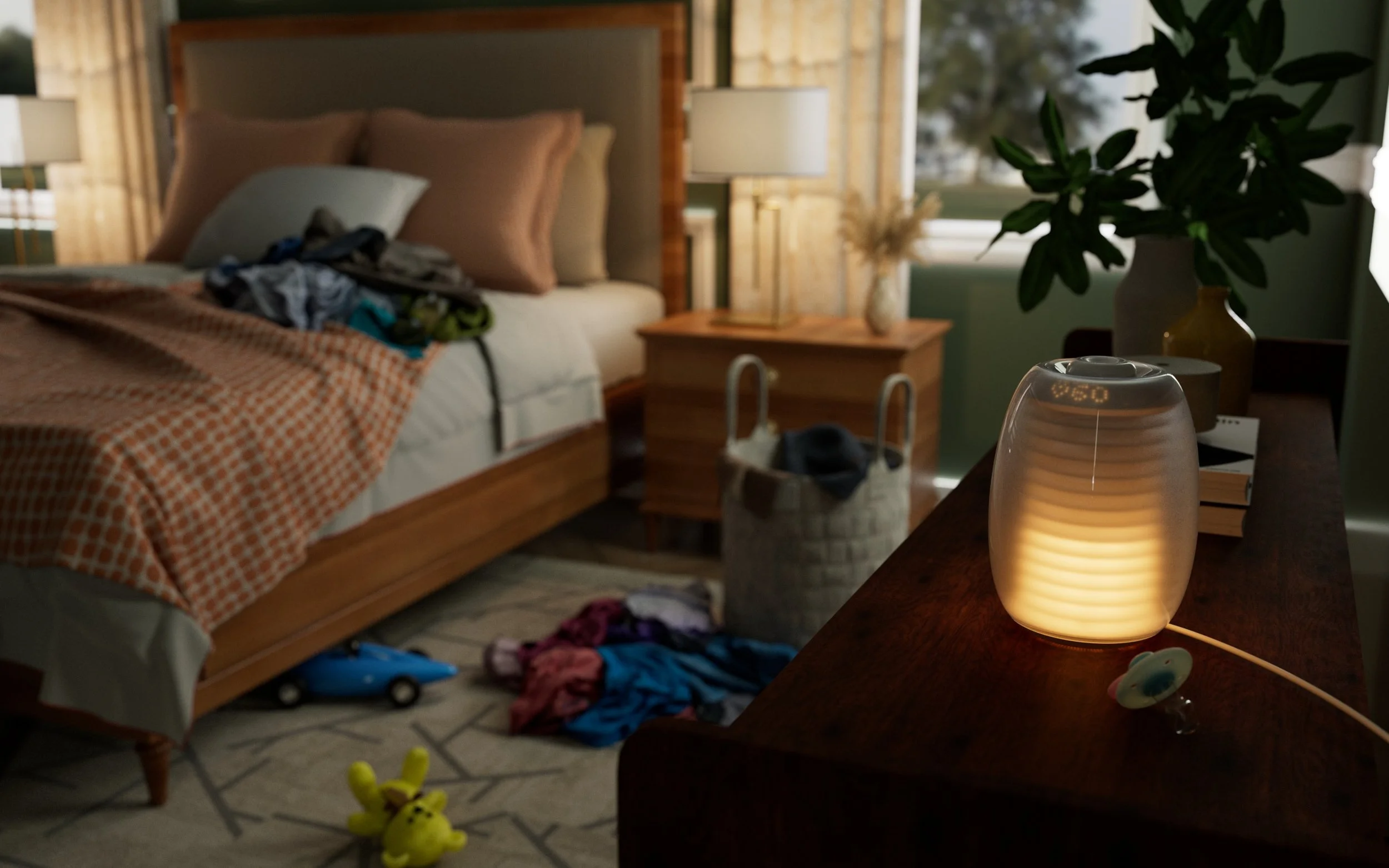
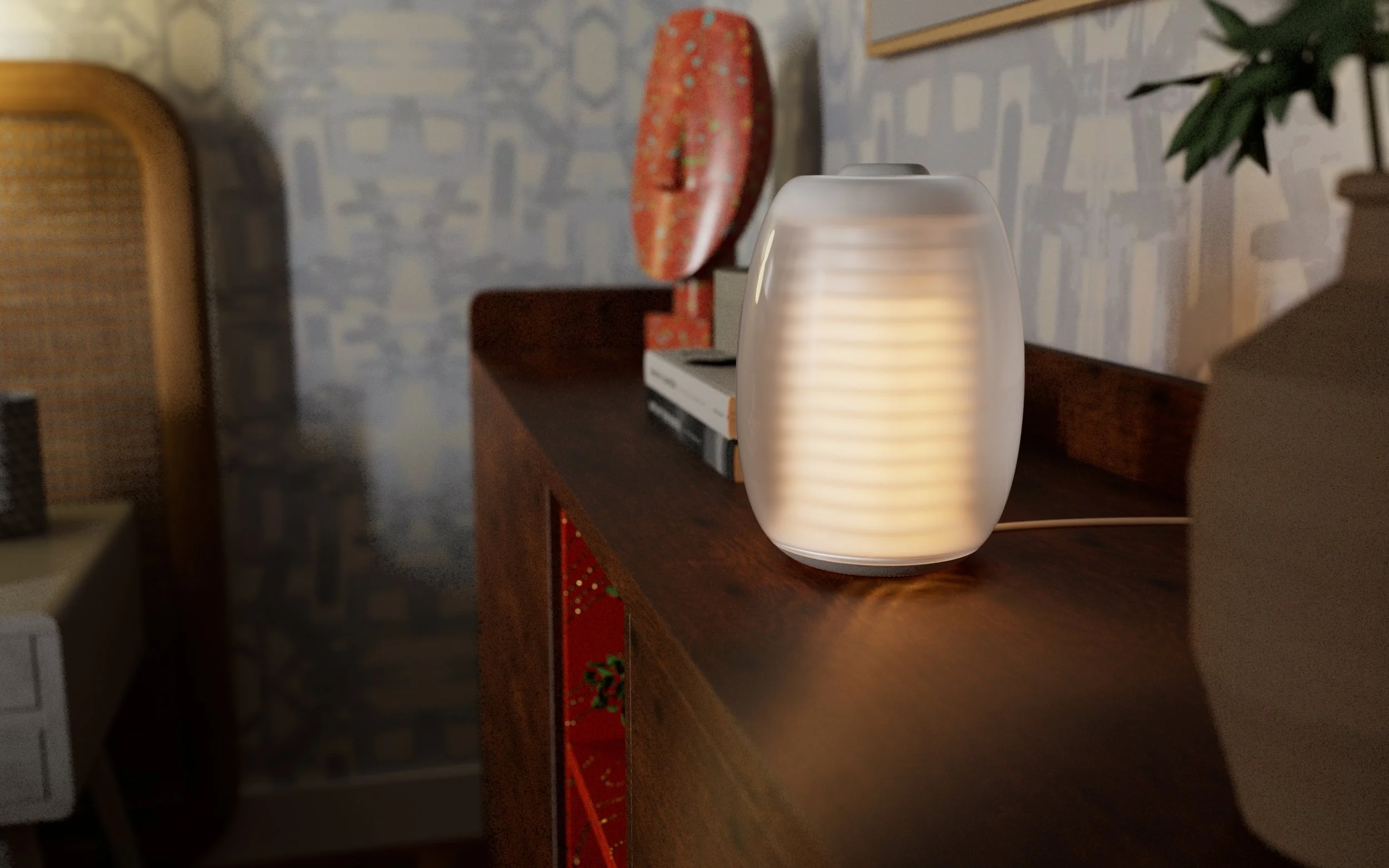
I used product renders to show Ohm in the spaces where it was meant to live: bedside tables, living rooms, offices, quiet corners, and evening routines. The goal was to position the lamp less like a device and more like an object people would want to keep out in their home.
The renders also helped communicate product details, materials, light states, and the relationship between the lamp and sensing stone before final production assets existed.
App Design
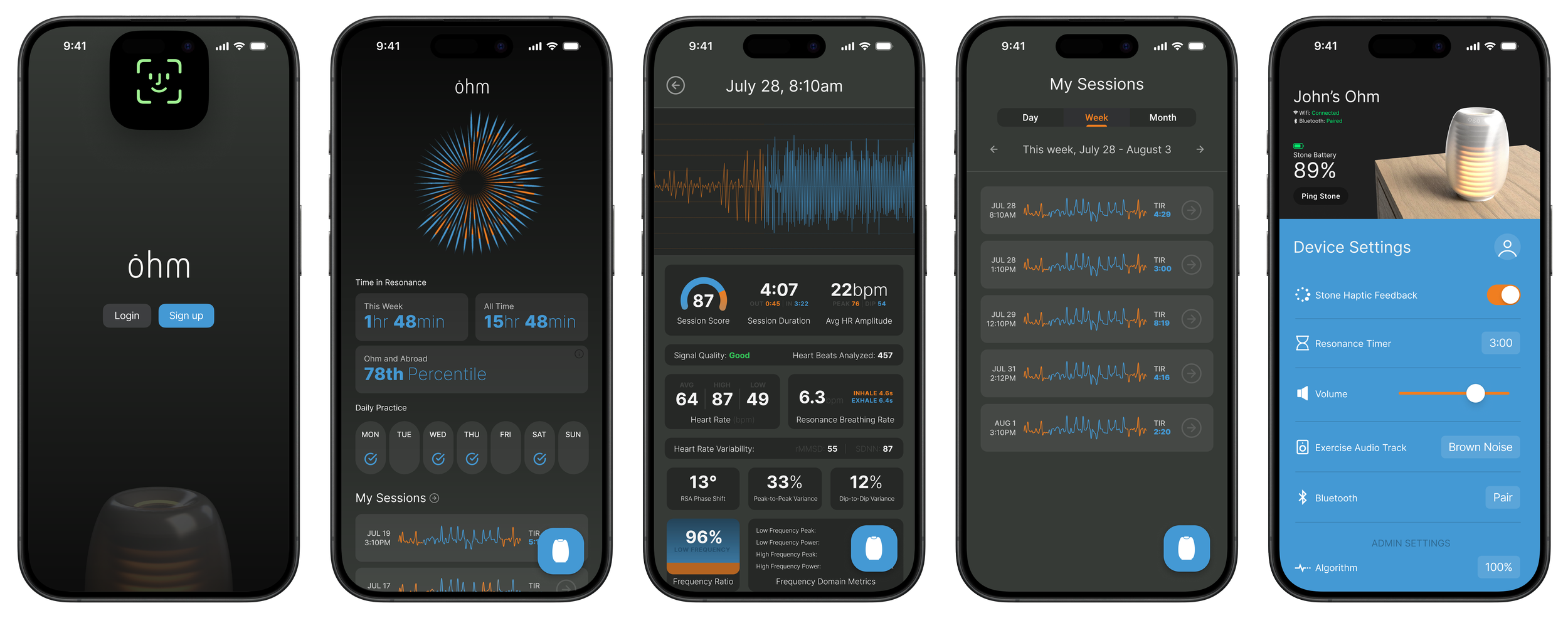
The app was designed as a companion, not the center of the experience.
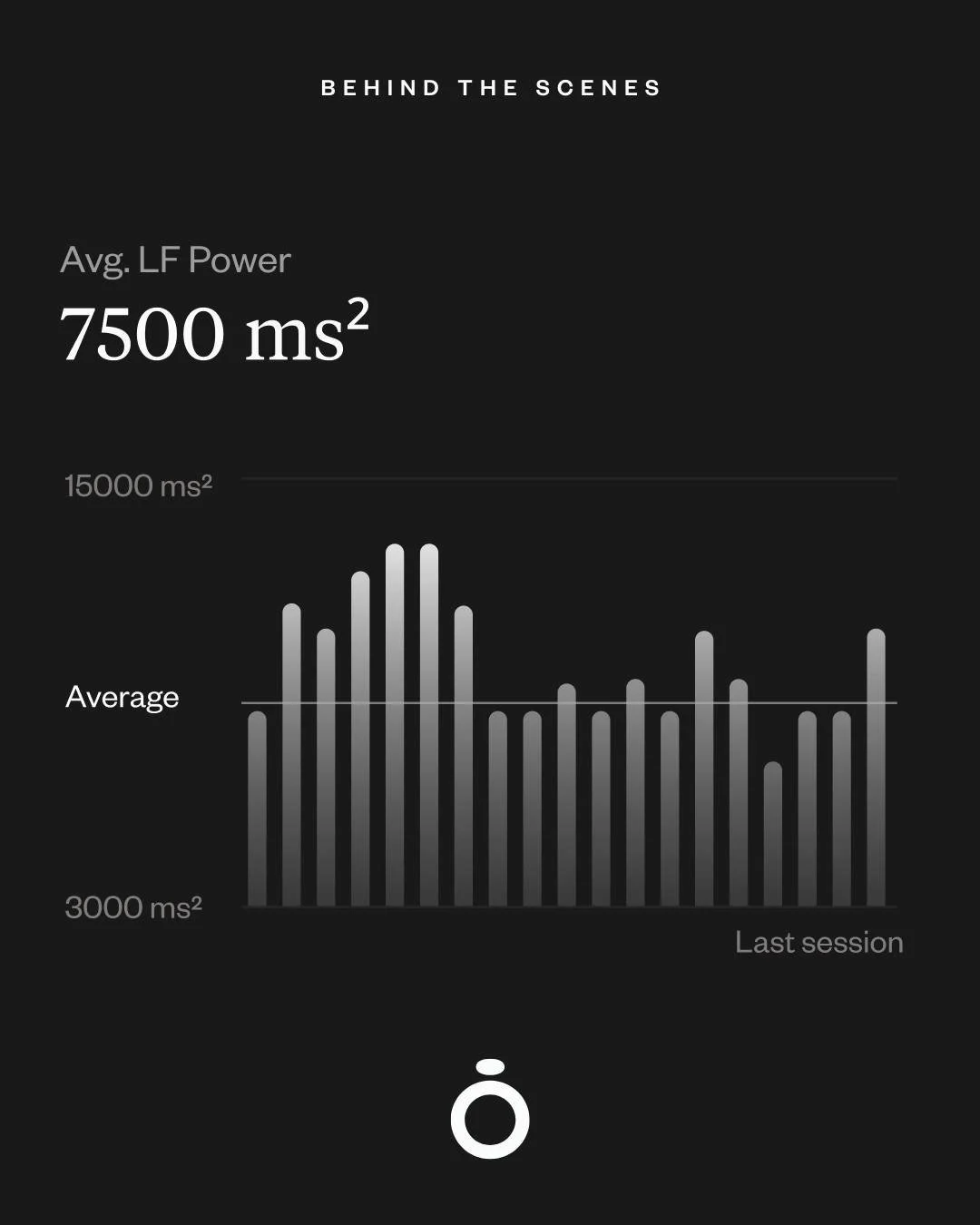
Ohm’s core practice happens away from the screen, with the lamp and sensing stone doing the guiding. The app supports that experience by helping users understand their sessions, track progress, and build a longer-term relationship with the practice.
The interface needed to feel technical enough to communicate real biometric insight, but calm enough to belong in the same world as the product.
Social
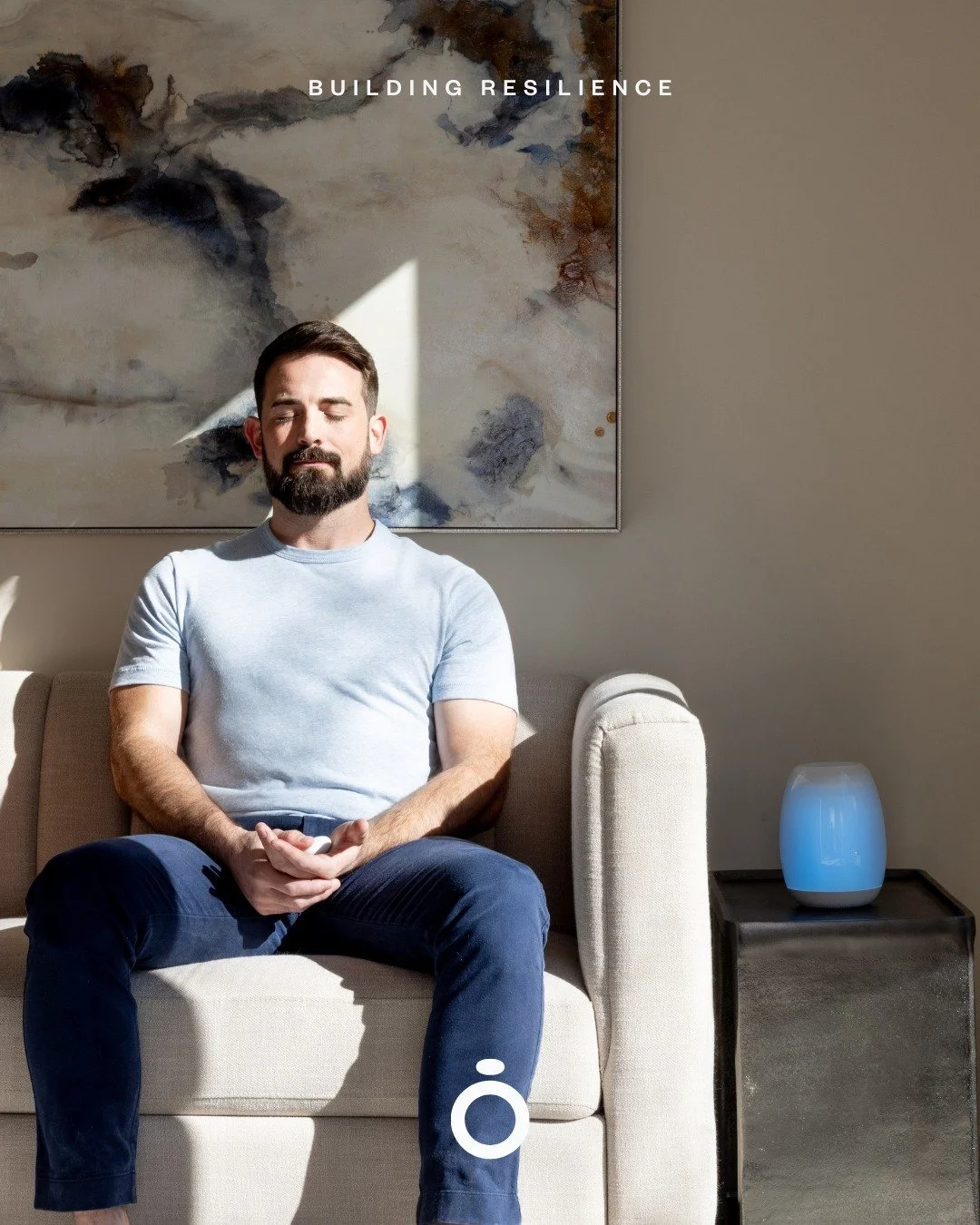
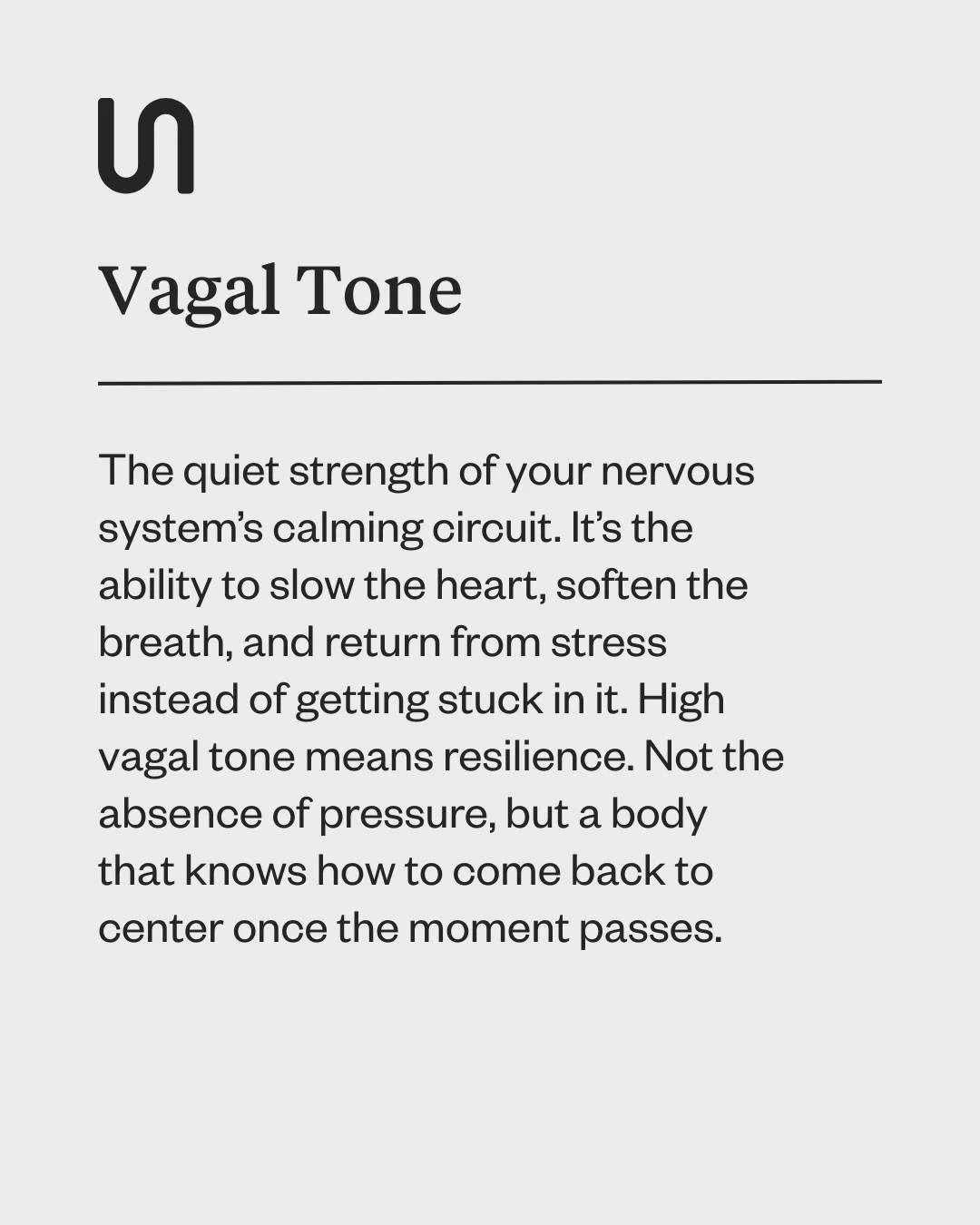
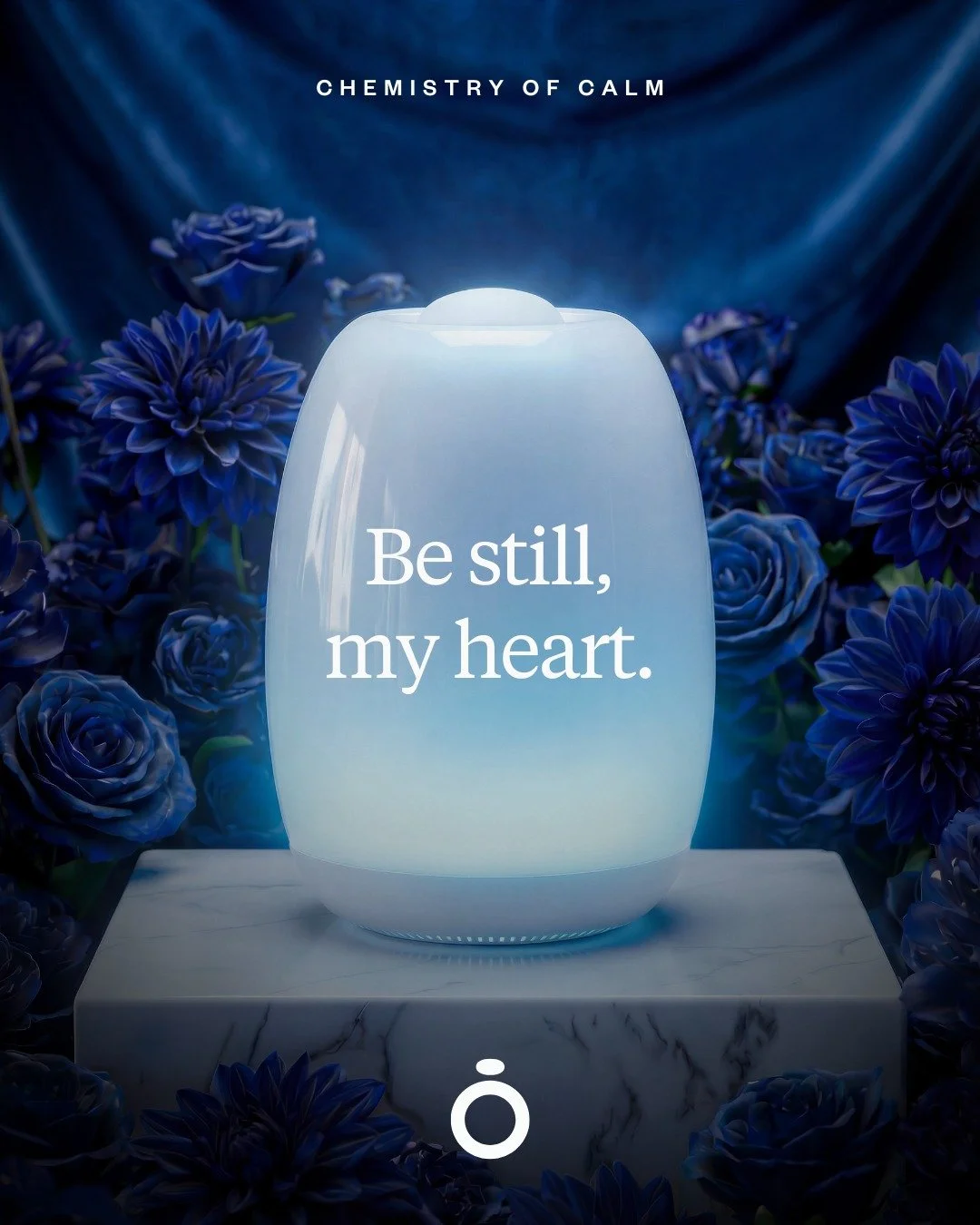
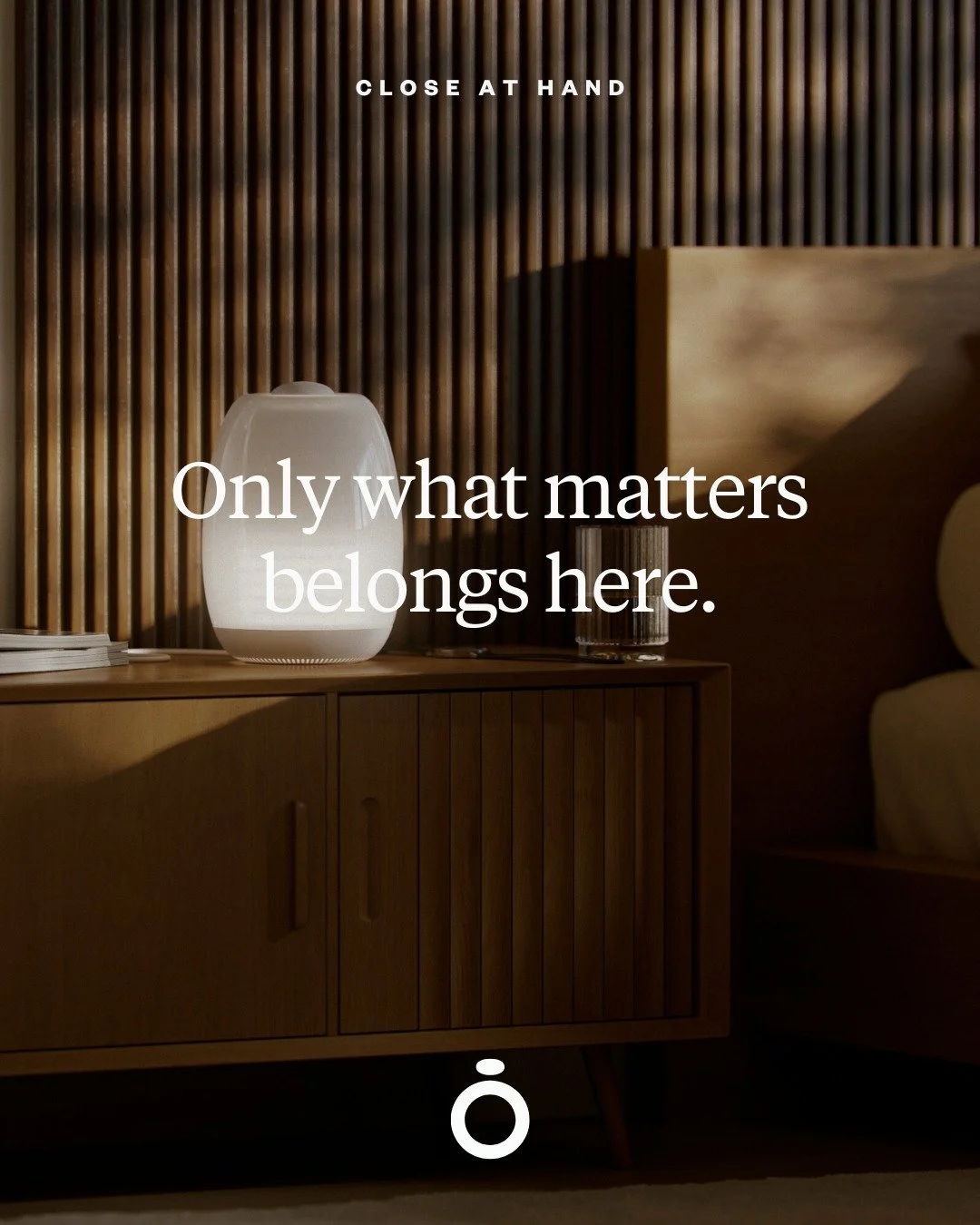
The social system gave Ohm a place to build the world around the product.
Some posts focused on the science of breathwork and the nervous system. Others leaned into mood, ritual, stress, sleep, family life, and the quiet tension of modern wellness. Across the work, the goal was to make Ohm feel thoughtful and elevated without drifting into wellness cliché.
The visual language mixed product imagery, editorial photography, simple type, data-inspired graphics, and short-form video concepts to create a brand that could speak both emotionally and physiologically.